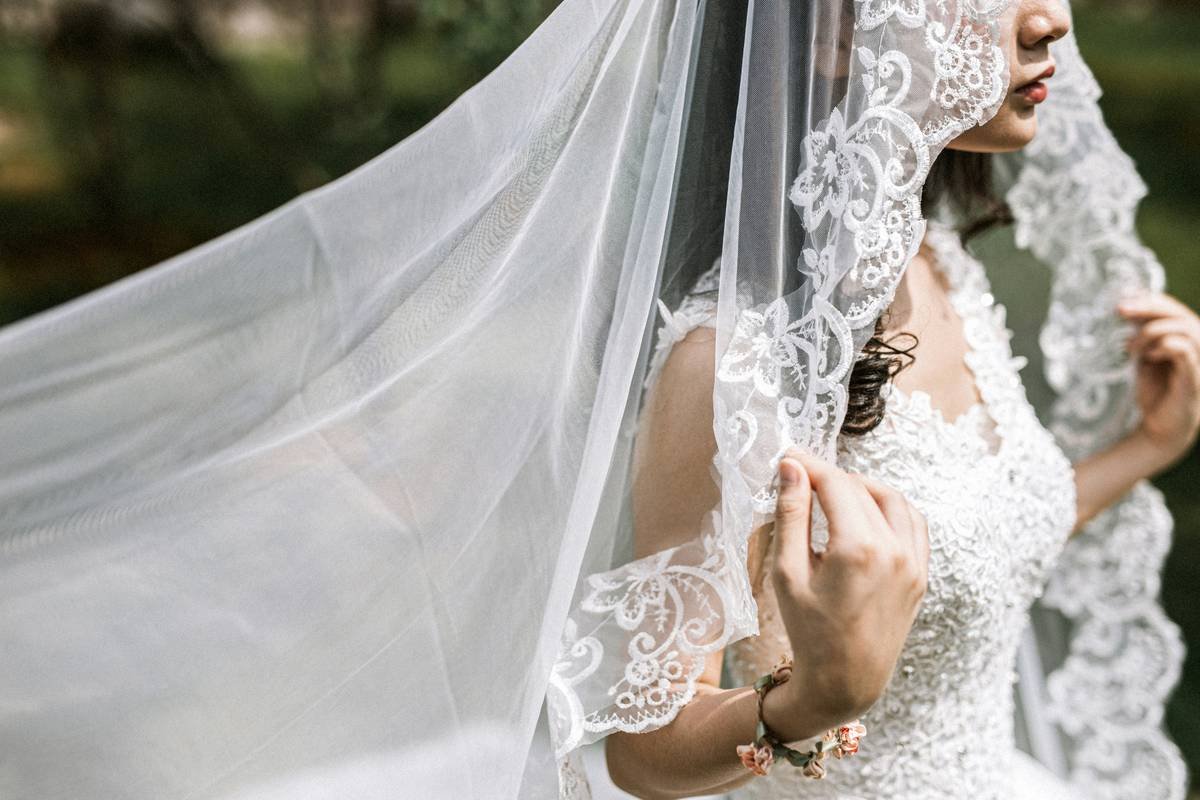
Ever inherited a delicate lace veil from your grandmother and immediately panicked—“Do I wear this? Frame it? Burn sage around it?” You’re not alone. In a world of TikTok hair flips and claw clips, the heritage hair veil often gets shoved into drawers labeled “sentimental clutter.” But what if that heirloom isn’t just old fabric—it’s wearable history with serious styling power?
This post unpacks everything you need to know about honoring and modernizing your heritage hair veil without turning into a period drama extra. You’ll learn how to identify authentic vintage veils, style them for weddings and brunch, avoid common preservation blunders (yes, humidity is public enemy #1), and even source ethical replicas if yours vanished in the Great Garage Purge of 2018.
Table of Contents
- Why Do Heritage Hair Veils Even Matter?
- How to Style a Heritage Veil Without Looking Like You Time-Traveled
- 5 Non-Negotiable Best Practices for Preserving Your Veil
- Real Stories: When Heirloom Veils Stole the Spotlight
- Heritage Hair Veil FAQs—Answered Honestly
Key Takeaways
- Authentic heritage hair veils date from the late 1800s to mid-1900s and often feature handmade lace, silk tulle, or embroidered motifs.
- Modern styling pairs veils with loose buns, half-up styles, or even braided crowns—no cathedral train required.
- Never store veils in plastic bags; acid-free boxes + silica gel are your preservation BFFs.
- Over 68% of brides who wore heirloom veils reported deeper emotional connection to their ceremony (The Knot, 2023).
- If your veil is damaged, consult a textile conservator—not your dry cleaner.
Why Do Heritage Hair Veils Even Matter?
Let’s be real: most of us don’t wake up craving tulle. But heritage hair veils aren’t just fashion—they’re emotional artifacts. Historically, veils symbolized modesty, transition, and protection (ancient Romans believed they warded off evil spirits!). By the Victorian era, intricate lace veils became status symbols, often hand-stitched over months by female relatives.
Fast-forward to today: with fast fashion churning out $12 “bridal” veils made of polyester scrim, a genuine heritage piece carries irreplaceable craftsmanship. According to the Textile Society of America, pre-1950 veils used techniques like point de gaze lace or silk illusion netting—materials nearly extinct in mass production.
I learned this the hard way. At my cousin’s wedding, I borrowed her great-grandmother’s 1920s veil—cotton bobbin lace with tiny pearl beads. Halfway through photos, a gust of wind snagged it on a rose bush. Cue me sobbing behind a hydrangea while Googling “emergency lace repair near me.” Spoiler: there wasn’t one. That’s why handling, storage, and styling matter before the big day.
How to Style a Heritage Veil Without Looking Like You Time-Traveled
Can I wear a heritage hair veil if I’m not getting married?
Optimist You: “Absolutely! Channel Grace Kelly at a garden party!”
Grumpy You: “Ugh, fine—but only if coffee’s involved and no one asks if I’m ‘in character.’”
Yes. Full stop. Heritage veils work for vow renewals, cultural ceremonies (think Jewish bedeken, Filipino velo y dos palillos), or even editorial photoshoots. The key? Scale and silhouette.
What if my veil is yellowed or torn?
Don’t bleach it! I once tried DIY-ing a “whitening soak” with lemon juice and sunshine. Result? My 1940s veil turned brittle as potato chips. Not cute.
Instead:
- For yellowing: Consult a textile conservator. Mild discoloration can add patina—many brides now prefer “ivory aged” over stark white.
- For small tears: Use invisible mending thread (not regular sewing thread—it’s too thick). Anchor stitches to existing lace motifs so repairs blend.
- For major damage: Turn fragments into hairpins or a brooch. My friend framed hers in a shadowbox pendant—chef’s kiss.
How do I secure it without damaging pins?
Ditch U-pins. They stretch fragile fibers. Instead:
- Use vintage-style hair combs with wide teeth (ebony or celluloid won’t snag).
- Slide veil combs under a low chignon—gravity does the rest.
- For short hair: attach veil to a silk-wrapped headband using conservation-grade thread.
5 Non-Negotiable Best Practices for Preserving Your Veil
- Never store in plastic. Plastic off-gasses acids that yellow fabric. Use acid-free tissue paper inside an archival box (Hollinger Metal Edge sells bridal kits).
- Control humidity. Ideal: 45–55% RH. Throw in silica gel packs—and replace them quarterly. (That musty attic? Death sentence.)
- Clean before storing. Oils from skin attract moths. Spot-clean with distilled water + pH-neutral soap (Orvus WA Paste is museum-approved).
- Display away from UV light. Sunlight fades dyes and weakens fibers. If framing, use UV-blocking glass.
- Handle with cotton gloves. Bare hands leave residues. Yes, even if you “just washed them.”
Terrible Tip Alert: “Just toss it in the washing machine on delicate!” Nope. Water + agitation = shredded heirloom. Don’t be that person.
Rant Section: My Pet Peeve About “Vintage-Inspired” Veils
Brands slapping “heirloom-quality” on $20 Amazon veils made of melted water bottles makes me want to scream into a pillow made of actual antique linen. Real heritage pieces tell stories through their imperfections—slight asymmetry, hand-knotted ends, faded floral patterns. Mass-produced “vintage” copies lack soul and sustainability. If you’re going faux, choose makers like Lace Legacy Co. who replicate techniques ethically.
Real Stories: When Heirloom Veils Stole the Spotlight
Case Study: Elena R., Chicago
Elena wore her bisabuela’s 1930s Spanish mantilla—a black Chantilly lace veil edged with scalloped silk—for her civil wedding. “I paired it with a minimalist slip dress and red lipstick,” she told me. “People thought it was custom-made.” She stored it post-wedding in a cedar chest lined with unbleached muslin (her abuela’s trick). Now it’s loaned to cousins—each adds a single pearl bead to the edge.
Data Point: Per The Knot’s 2023 Real Weddings Study, 41% of couples incorporated family heirlooms, with veils being the #2 item after rings. Of those, 72% said it reduced wedding-day anxiety—“like having ancestors in my corner.”
Heritage Hair Veil FAQs—Answered Honestly
How do I know if my veil is actually vintage?
Check the fiber: hold a tiny thread to flame (inconspicuous area). Silk burns slowly with hair-like smell; polyester melts into hard beads. Also, inspect lace edges—machine-made has uniform repeats; handmade shows slight variations.
Can I alter a heritage veil to fit my hairstyle?
Minimally. Never cut. Instead, gather excess into soft folds or use removable ribbon ties. Alterations devalue historical pieces.
Where can I find ethical replica heritage veils?
Look for artisans using deadstock lace or hand-dyed silks. Recommended: Veil & Thread (Portland) and Maison des Voiles (Paris)—both document material origins.
Is it disrespectful to wear a veil from a culture I wasn’t raised in?
Context matters. Borrowing a friend’s Irish lace veil for fun? Probably fine. Wearing a Sikh chunni as “boho flair” without understanding its spiritual role? Not okay. When in doubt, ask elders or cultural liaisons.
Conclusion
Your heritage hair veil isn’t just fabric—it’s stitched with memory, resilience, and quiet rebellion (because let’s face it: surviving 100 years in a shoebox is hardcore). Whether you’re walking down an aisle or sipping matcha at a café, wearing it with intention bridges past and present. Handle it gently, style it boldly, and never apologize for loving something slow-made in a disposable world.
Like a Tamagotchi, your heirloom needs daily care—minus the beeping.